
概览
借助安全机制支持,轻松应对多核设计挑战
基于十余年大规模量产芯片验证经验构建,Ncore™ 产品系列包含多款经过硅验证的缓存一致性片上网络,具备高度可配置性和卓越能效,可兼容包括 Arm® 和 RISC-V 在内的各种处理器架构。主要特性包括:
- 用于多处理器系统的缓存一致性,以及面向先进高性能I/O的一致性支持。
- 支持跨芯粒的扩展缓存一致性,助力性能扩展、工艺优化与功能专用化设计。
- 可选 ISO 26262 ASIL B/D 认证Resilience功能安全套件。
- 与 Magillem®IP 集成自动化软件兼容,帮助团队扩展模块化架构、简化多芯粒设计并缩短开发周期。
将 Ncore 与 FlexGen® 或 FlexNoC® 结合使用,为设计人员在扩展的多裸片解决方案中实现无与伦比的性能优化、可扩展性和系统集成提供了基础技术。这带来了强大的缓存一致性、高效的通信和灵活性,从而助力实现市场差异化和加快产品上市速度。
产品系列
Ncore
Ncore
Multi-Die
Ncore
高效、低功耗的一致性,最多支持16个一致性发起者(可选最高支持32个),以及面向高性能I/O的I/O一致性。Ncore提供真正的异构一致性,同时支持AMBA CHI和AMBA ACE处理器,甚至可以利用Arteris通用一致性协议在两者之间实现一致性互操作。它支持高度可配置的末级缓存,有助于提升性能并降低系统功耗。代理缓存(proxy cache)可简化非一致性加速器向一致性域的集成,从而简化软件、提升性能,并进一步降低AI/ML SoC的系统功耗。
面向高性能PCIe设备的PCIe加速功能,通过第三方PCIe控制器进行接口连接,可为AI、基础设施、服务器、数据中心和HPC应用实现高速通信。
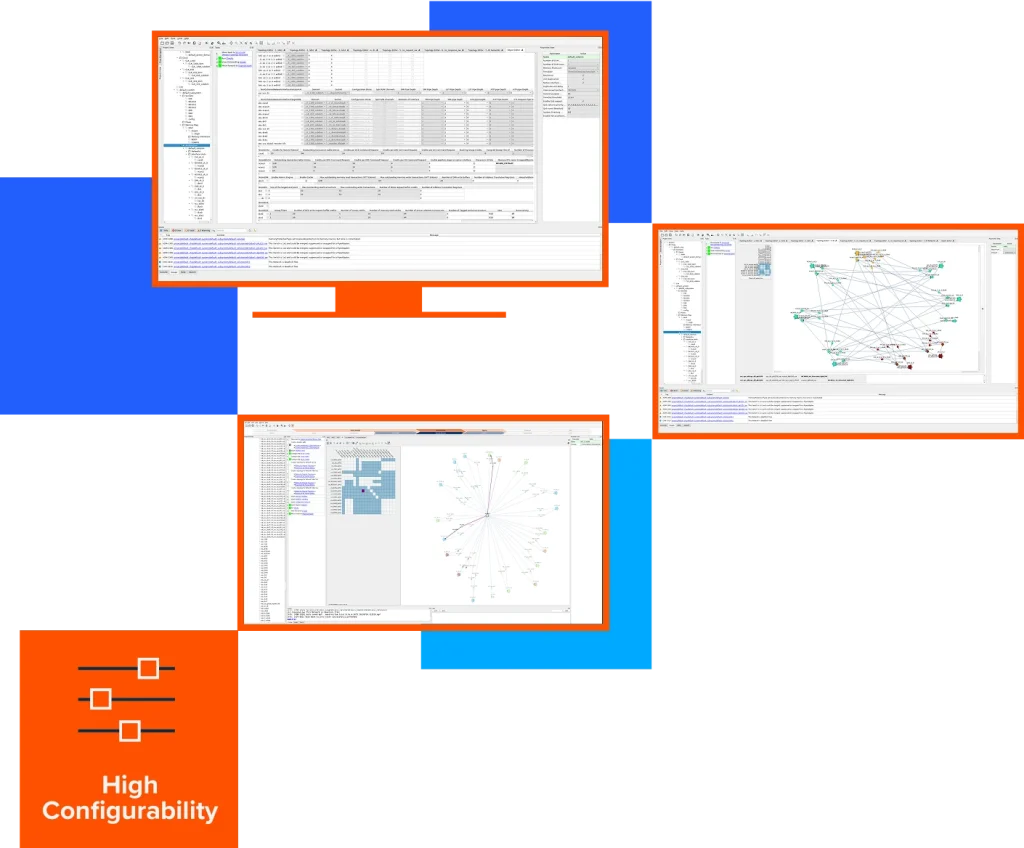
自动生成网状(mesh)拓扑结构,以及对逻辑等效的NoC和处理器单元瓦片(tile)进行物理布局排布,可简化物理设计并缩短产品上市时间。
Ncore Multi-Die
将一致性互连扩展至两到四个裸片,从而实现同构性能扩展,或对不同芯粒进行一致性异构集成,以优化工艺并实现专用化。每个Ncore Multi-Die芯粒都包含一个Ncore实例,最多支持16个一致性发起者。
每个裸片上的Ncore实例可以有不同的配置。Ncore实例通过Arteris多裸片技术连接在一起,经由预先集成并验证的第三方UCIe控制器和PHY接口IP,构建出一个跨越多个芯粒的单一、更大的互连一致性网络。
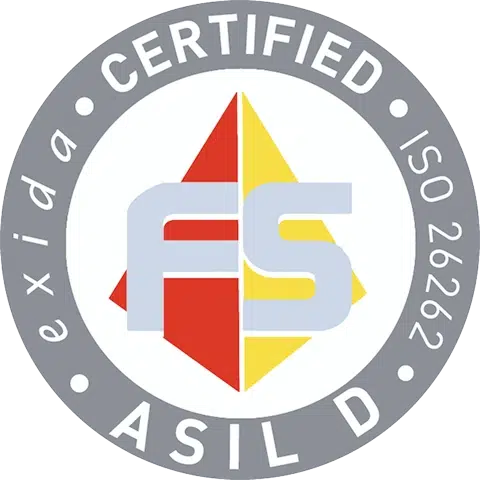
ISO 26262 ASIL B/D认证的功能安全
作为整个Ncore产品系列的可选功能,Ncore弹性与安全功能包可一键式实现ISO 26262 ASIL功能安全(FuSa),并已通过Exida的独立认证。Ncore可自动生成FMEDA数据,这对于定量预测故障率并证明整个系统的安全合规性至关重要。
Product Range
Ncore
Ncore
Multi-Die
Ncore
Efficient, low-power coherency up to 16 coherent initiators (with an available option for up to 32), as well as I/O coherency for high-performance I/O. Ncore offers true heterogeneous coherency, supporting both AMBA CHI and AMBA ACE processors, and can even coherently interwork between them utilizing the Arteris generic coherency protocol. It supports highly configurable last-level caches, helping to increase performance and reduce system power. The proxy cache eases integration of non-coherent accelerators into the coherent domain, simplifying software, increasing performance, and further reducing system power for AI/ML SoCs.
PCIe acceleration for high-performance PCIe devices, interfaced via a third-party PCIe controller, enables high-speed communications for AI, infrastructure, server, data center and HPC applications.
Automated generation of mesh topologies and physical tiling of logically equivalent NoC and processor element tiles eases physical design and reduces time-to-market
Ncore Multi-Die
Extends the coherent interconnect across two to four dies, enabling homogeneous performance scaling or coherent heterogeneous integration of differing chiplets for process optimization and specialization. Each Ncore Multi-Die chiplet contains an Ncore instance with up to 16 coherent initiators.
Ncore instances may have different configurations for each die. Ncore instances are linked together by Arteris multi-die technology to create a single, larger coherent interconnect spanning multiple chiplets, via pre-integrated and validated third-party UCIe controller and PHY interface IP.
ISO26262 ASIL B/D Certified Functional Safety
An available option across the entire Ncore product range, the Ncore Resilience and Safety package enables push-button ISO26262 ASIL functional safety (FuSa), which has been independently certified by Exida. Ncore automates the generation of FMEDA data, which is crucial for quantitatively predicting failure rates and demonstrating safety compliance of the entire system.
- Yes
- No
- Option
Advantages
创建高性能一致性SoC
可扩展
Ncore 提供高带宽、低延迟的互连架构,实现SoC各组件之间以及多个裸片之间的高效通信。这为从小型嵌入式系统到数十亿晶体管级的大型多裸片设计,提供了可扩展的性能和能效。
可配置
多协议一致性为传统和未来IP的支持提供了选择与复用。CHI-E、CHI-B和ACE一致性接口,以及ACE-Lite I/O一致性代理接口,允许多个发起者IP连接到同一个Ncore。Ncore还能让AXI非一致性代理作为I/O一致性代理运行。
安全
由外部评估机构进行ISO认证,确保 Ncore 可用于符合ISO 26262标准的芯片(从ASIL B到ASIL D),该功能由Ncore安全与可靠性产品选项提供支持。针对Ncore配置,可自动生成故障模式、影响及诊断分析(FMEDA)数据。
特性
Ncore 关键特性
- 高度可扩展的系统
- 真正的异构一致性,支持AMBA CHI与AMBA ACE混合使用
- 为带缓存的处理器提供完全一致性,为加速器提供I/O一致性
- 通过 AMBA CXS.B 接口支持基于 UCIe™ 1.1 的 Multi-die 缓存一致性,支持最多 4 个 Chiplet,以及每个 Die 最高 4 条 128 GB/s 链路*
- 可配置的网络与拓扑结构
- 网状(Mesh)拓扑,支持重复性模块的物理瓦片化布局*
- 功能安全,支持FMEDA自动生成及ASIL D认证*
- 可配置的探听过滤器(snoop filters)
- I/O代理缓存和系统内存缓存
- 低功耗
- 服务质量(QoS)
- 调试与追踪/监控
探索更多Ncore特性,下载产品手册。
*表示产品选配项
功能亮点
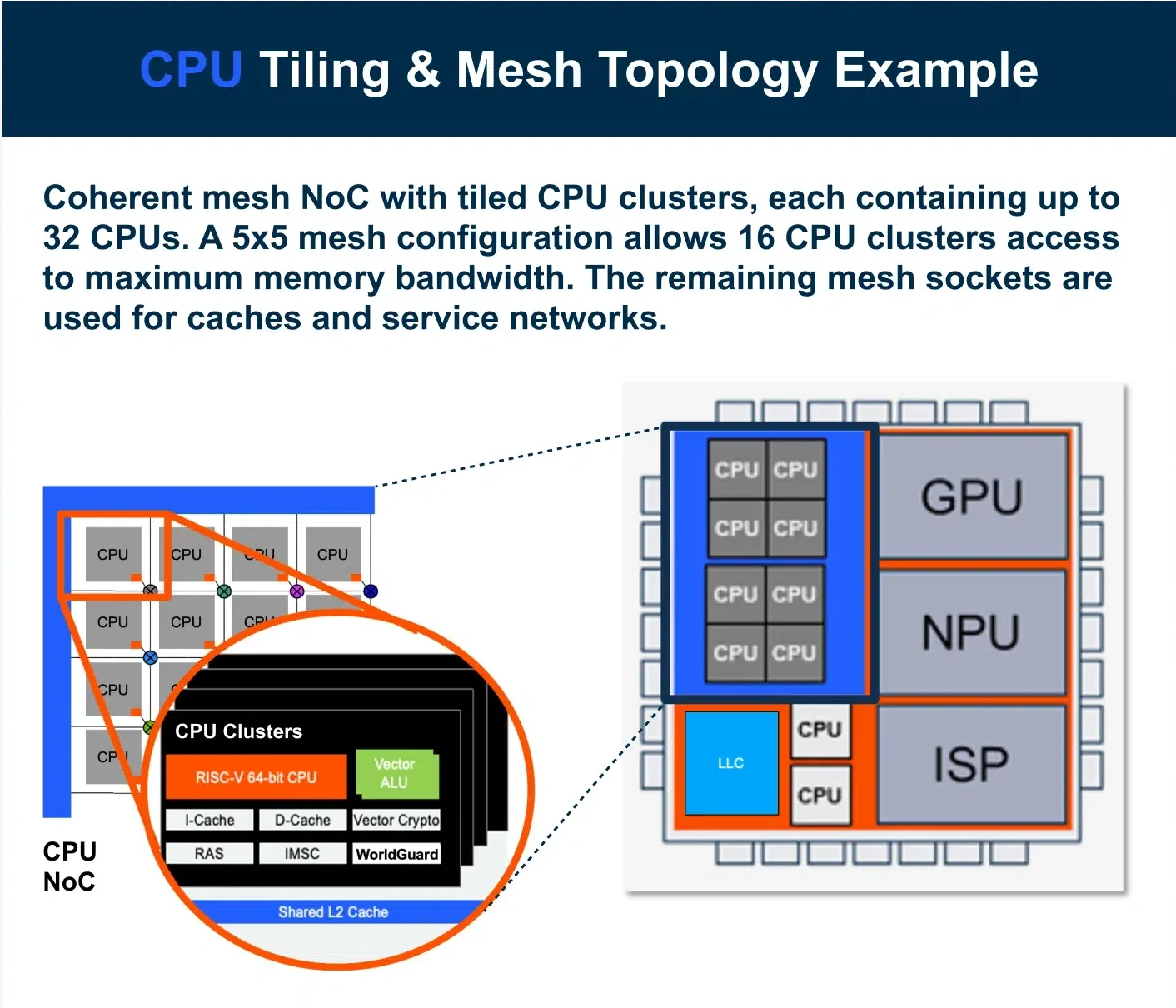
基于 Ncore 的 NoC 瓦格化
采用网状拓扑的 NoC 瓦格化架构,支持缓存一致性 CPU 集群扩展。支持最多 256 个 CPU 核心,每个集群最多 8 核。
- 提升性能扩展能力
- 缩短设计周期
- 加快测试验证
- 降低设计风险
- 支持 Arm® 和 RISC-V 架构
借助模块化、可扩展的设计方法,实现更快速的集成、验证和优化。
优势
Ncore 产品优势
更高频率,更低延迟
使用多个可配置的探听过滤器,以适应不同的缓存组织结构。
低功耗
减少对片外主存的访问次数,从而降低系统功耗。
更小的 Die 面积
通过优化互连架构与资源利用率,在实现高性能的同时降低芯片面积占用。
简易配置
Ncore 能够适配各类缓存一致性代理的行为模式和特性,实现灵活高效的系统配置。
更快上市
瓦格化架构可加速物理设计、实现流程以及时序收敛,从而缩短产品上市时间。
灵活拓扑
可从交叉开关(crossbar)、网状(mesh)和自定义(ad-hoc)拓扑中进行选择。
安全
自动生成FMEDA安全文档,并通过ISO 26262 ASIL B至ASIL D认证。
自动化验证
相比手动生成验证,可节省数百小时的工作量。
更短的周期
更少的迭代循环,加快开发速度。
面向芯粒时代的 Multi-Die 解决方案
随着 AI 系统突破单芯片(Single-Die)架构限制,迈向 Multi-Die 多芯粒架构时代,Arteris 在支持硅系统持续扩展的同时,始终保持一致的系统架构。
- 将智能 NoC 数据传输能力扩展至裸片(Die)边界之外
- 保留 QoS、虚拟通道以及原始设计意图
- 通过自动化技术与安全机制简化芯片集成
Arteris Multi-Die 解决方案帮助工程团队在多个裸片之间进行系统划分与部署,同时保持统一的架构设计,从而缩短开发周期并降低系统集成风险。
资源中心
- SemiWiki: How NoC Tiling Capability is Changing the Game for AI Development with Andy Nightingale
- EE Journal: Managing the Massive Data Throughput: AI-Based Designs and The Value of NoC Tiling
- Electronic Design: All About NoCs
- SemiWiki: The Impact of Arteris on Automotive and Beyond with Frank Schirrmeister
- SemiWiki: A Broad View of Design Architectures and the Role of the NoC with Arteris’ Michal Siwinski
- EE Journal: The Freedom to Innovate: Arteris and the Rise of RISC-V
- Automating the Generation of Scalable and Reusable FMEDA in Complex Systems-on-Chip (SoCs)
- Efficient Scaling of AI Accelerators Using NoC Tiling
- FMEDA Automation for Scalability and Reuse in Complex Systems on Chips (SoCs)
- Is the Missing Safety Ingredient in Automotive AI Traceability?
- Safety Considerations for Network-on-Chip (NoC) Development
- The Role of Networks-on-Chips Enabling AI/ML Silicon and Systems
- Tiled Approach to System Scaling
- Chiplets: Opportunities and Challenges
- NoC-Centric System Performance for the Chiplet-Era with Platform Architect
- Optimizing Data Transport Architectures in RISC–V SoCs for AI/ML Applications
- Cache Coherency in Heterogeneous Systems
- Integration Challenges for RISC-V Designs
- Promises and Pitfalls of SoC Restructuring
- Scaling Performance in AI Systems
Frequently Asked Questions
What is Lorem Ipsum?
Lorem Ipsum is simply dummy text of the printing and typesetting industry. Lorem Ipsum has been the industry’s standard dummy text ever since the 1500s, when an unknown printer took a galley of type and scrambled it to make a type specimen book. It has survived not only five centuries, but also the leap into electronic typesetting, remaining essentially unchanged.
Where does it come from?
Why do we use it?
What is Lorem Ipsum?
Lorem ipsum dolor sit amet, consectetur adipiscing elit. Fusce ut egestas felis, id varius est. Etiam porttitor facilisis odio, interdum imperdiet ipsum bibendum vel. Pellentesque ac tempus nibh. Maecenas dignissim elit vitae risus rhoncus, vel ultrices nulla aliquam. Aliquam bibendum consectetur ipsum, quis tincidunt lectus feugiat porttitor. Vestibulum at molestie eros. Cras lacus purus, pretium auctor augue nec, porta dignissim purus.
Where does it come from?
Support and Training
Need help?
Support and services
Arteris provides world-class design support and services to our customers and partners.
Training
Unlock the full potential of Arteris products. Explore customized learning solutions designed to boost your expertise.
Arteris Academy
Learn at your own pace, on your schedule. Access our library of on-demand training modules and develop new skills today.
Latest news